Vihoom Food Vacuum Roll Bags: Test & Review
Introduction
In the world of sous-vide cooking, precision doesn't stop at the circulator. The choice of vacuum bag is a critical, often underestimated parameter that directly impacts the success, safety, and longevity of your preparations. A bad bag can lead to loss of vacuum, contamination, or worse, complete failure mid-way through a long cook. Today, we analyze the Vihoom Food Vacuum Roll Bags, a popular option presented as economical and versatile. Are these rolls suited for the rigorous demands of precision cooking, or are they limited to basic storage use? We dissect the specifications and cross-reference community feedback to give you a clear picture.
Strengths and Weaknesses: A Frank Summary
Before diving into the details, here is what immediately stands out from the analysis.
Strengths
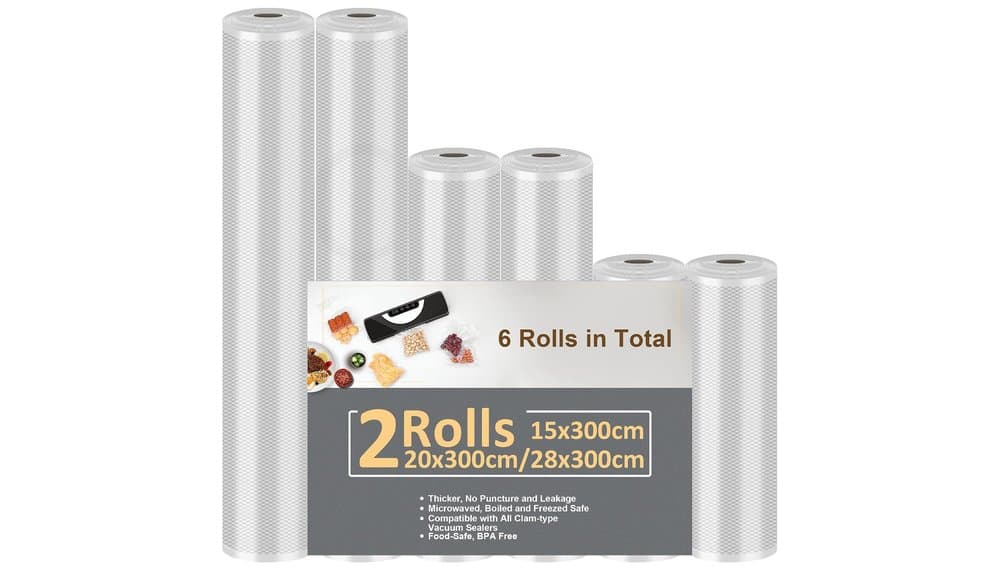
- Convenient and economical format: The system of rolls in three different widths (15, 20, and 28 cm) allows for great adaptability and reduces film waste.
- Wide stated compatibility: The bags are described as compatible with all vacuum machines (external suction types).
- Usage versatility: BPA-free material and a wide announced temperature range (-20°C to 110°C), covering freezing, refrigeration, and sous-vide cooking.
- Transparency and easy identification: The clear plastic allows you to see the contents without opening the bag.
Weaknesses
- Limited thickness and robustness: The main point of criticism, both from testers and a portion of users. The thickness of 150µm (15 microns) is considered thin, raising doubts about puncture resistance and performance during very long cooks.
- Sometimes inconsistent sealing: Feedback reports sealing problems, especially with certain machines, which can lead to airtightness failures.
- Insufficient rigidity for certain foods: Their flexibility, while practical, can be a drawback for easily packing moist or complex-shaped foods.
- Not recommended for demanding uses: Experts agree to reserve them for occasional use or for foods without bones, and not for long cook projects or professional preservation.
Detailed Analysis from a Precision Cooking Perspective
Compatibility and Ease of Use
On paper, the argument for universal compatibility is appealing, especially for a beginner who doesn't want to worry about brands. However, reality is more nuanced. Roll bags are designed for external suction vacuum sealers (with a sealing bar and a suction nozzle). They are not suitable for chamber vacuum sealers, which use bags with thicker, textured edges.
The major advantage lies in the three widths. This allows you to choose the size best suited to your piece of meat or vegetable, thus minimizing the volume of residual air after vacuum sealing – a key factor for even cooking and optimal preservation. For a user looking to streamline storage space and reduce usage costs, this is a major point.
Robustness and Performance During Long Cooks: The Heart of the Matter
This is where the Vihoom bags stumble, according to consolidated feedback. Sous-vide cooking, especially for cuts like beef ribs (24-48h) or pork shoulder (12-24h), demands flawless mechanical and thermal resistance.
- Thickness (150µm / 15 microns): This specification is at the low end of acceptable for domestic sous-vide cooking. Brands recommended for long cooks (like FoodSaver or certain professional brands) often offer bags of 200 to 250µm (20-25 microns). The difference is palpable to the touch and translates to better resistance to shocks, friction against the water bath walls, and bony edges.
- Heat resistance (110°C max): Theoretically, this limit is sufficient, as sous-vide cooking rarely exceeds 85-90°C. However, a thinner material can be more sensitive to points of localized thermal stress at the seal. Several users report less-than-perfect sealing reliability, with risks of delamination or micro-leaks after several hours in water.
- Moisture and liquid management: The product sheet emphasizes the ability to prevent moisture absorption. This is a basic property of PA+PE films. The real challenge for thin bags is resisting machine suction when the food is very liquid (marinades, water-filled vegetables). Thicker, more rigid bags offer a better barrier and are less likely to stick together and block the air passage.
Seal Quality and Airtightness
The seal is the weak link in any vacuum system. Opinions on the Vihoom bags are mixed. A majority of users find that it "gets the job done." But a significant minority reports repeated sealing failures. One review specifically mentions problems with a "Magicvac" machine, where residual heat from the sealing bar would melt the overly thin plastic from the second bag onwards, preventing good suction. This highlights a crucial point: optimal compatibility depends on the machine/bag pairing. A bag that is too thin may not be ideal for powerful machines or those whose sealing bar cools slowly.
The strength of the seal joint is directly related to the thickness and quality of the film. A film that is too thin can produce a fragile seal, susceptible to failure under pressure during long cooking or frozen handling.
Technical Specifications
| Characteristic | Vihoom Food Vacuum Roll Bags Detail | Analysis / Comparison |
|---|---|---|
| Format | 6 rolls: 2x28cm, 2x20cm, 2x15cm (x 300cm long) | Key advantage: size flexibility. Great length. |
| Material | PA + PE (Nylon + Polyethylene) | Standard for vacuum bags, BPA-free. |
| Thickness | 150µm (15 microns / 3.8 mils) | Sensitive point. Low thickness. Standard for light use, borderline for long cooks. |
| Temperature Range | -20°C to +110°C | Covers freezing and standard sous-vide cooking needs. |
| Machine Compatibility | External suction machines | Not suitable for chamber vacuum sealers. |
| Reusable | Yes, after washing | Common to most bags, but long-term durability may be limited by thinness. |
| Other Features | Microwaveable (by piercing the bag), Freezer safe | Claimed versatility for reheating and preservation. |
What Users and Testers Say
The synthesis of nearly 3000 reviews and available technical analyses paints a nuanced picture.
Satisfied users (majority) highlight the convenience of the roll format and the good value for money. They appreciate the ability to cut the desired size and find the bags "sufficient" for regular domestic use freezing meats, vegetables, or prepared meals. Phrases like "perfectly suited to my machine," "good quality," "sturdy and practical bags" are common. For these users, the product meets the expectation of an economical and functional solution.
Disappointed or critical users (minority but recurring) consistently point out the thinness of the material. Terms like "too thin," "inferior quality," "not rigid enough" are recurrent. The negative review citing technical problems with a specific sealer is instructive and corroborates expert warnings. One user even notes that you can find "better quality in supermarkets."
Expert/forum analysis is unequivocal: the Vihoom bags are classified as an entry-level option. Their conclusions, which we share after analyzing the data, are that these bags may be suitable for:
- Freezing foods without bones.
- Short sous-vide cooks (less than 4-6 hours).
- Occasional use where absolute reliability is not critical.
On the other hand, they formally advise against them for:
- Long-duration sous-vide cooks (24h+) where the risk of failure is increased.
- Foods with sharp bones (ribs, whole chicken).
- Demanding or professional users for whom reliability outweighs cost.
Conclusion
The Vihoom Food Vacuum Roll Bags are a product with two faces. On one hand, their proposition is attractive: an economical, flexible, and practical kit that will perfectly meet the needs of a beginner or occasional sous-vide cook, for short cooks and freezer storage of standard foods. The variety of sizes is a real plus for optimizing space and reducing costs.
On the other hand, for the precision cooking enthusiast who regularly pushes limits with 24, 48, or 72-hour cooks, or who regularly packs risky items (bones, shellfish), their limited 150µm thickness is an Achilles' heel. Feedback on random sealing issues and testers' warnings are signals to be taken seriously. In this context, reliability is not optimal.
Our verdict: These bags are a good backup or transitional solution, but not the reference product for a committed and demanding sous-vide cooking practice. If your practice is serious and the prospect of a leak during a long cook worries you, it is wise to invest in thicker, technically proven bags, even if it costs a little more per unit. For moderate use and simple preparations, however, the Vihoom bags offer versatility and economy that are hard to beat. The final choice therefore depends on the level of reliability you demand from your cooking chain.
100% free and independent — All our articles are written independently, without any sponsorship. We may earn a commission on purchases made through our links, at no extra cost to you.
Articles you might like
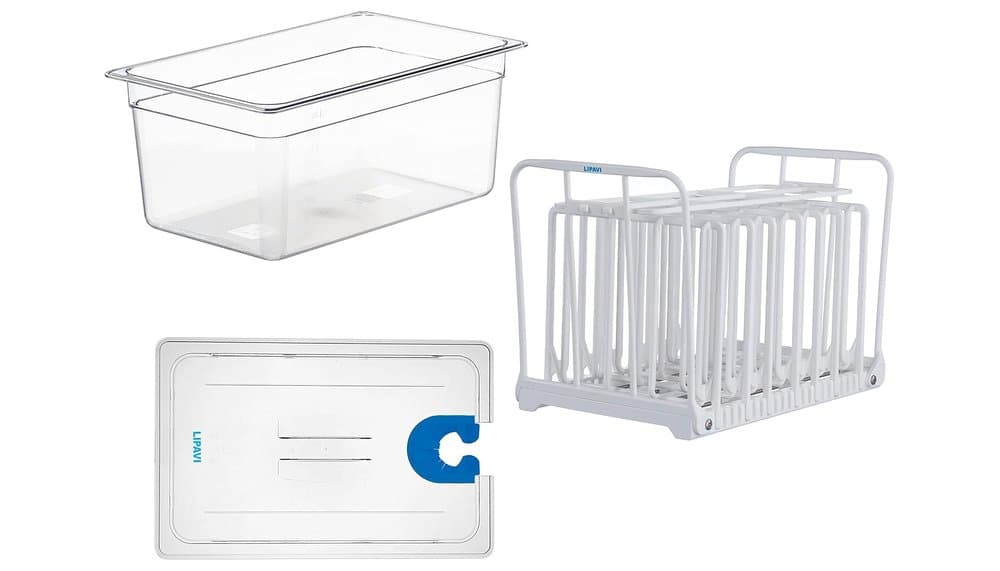
LIPAVI NXC15-UNIR Sous Vide Water Bath Review
The LIPAVI NXC15-UNIR is a dedicated sous vide water bath system, including container, lid, and basket—a complete ecosystem for long, precise cooks.
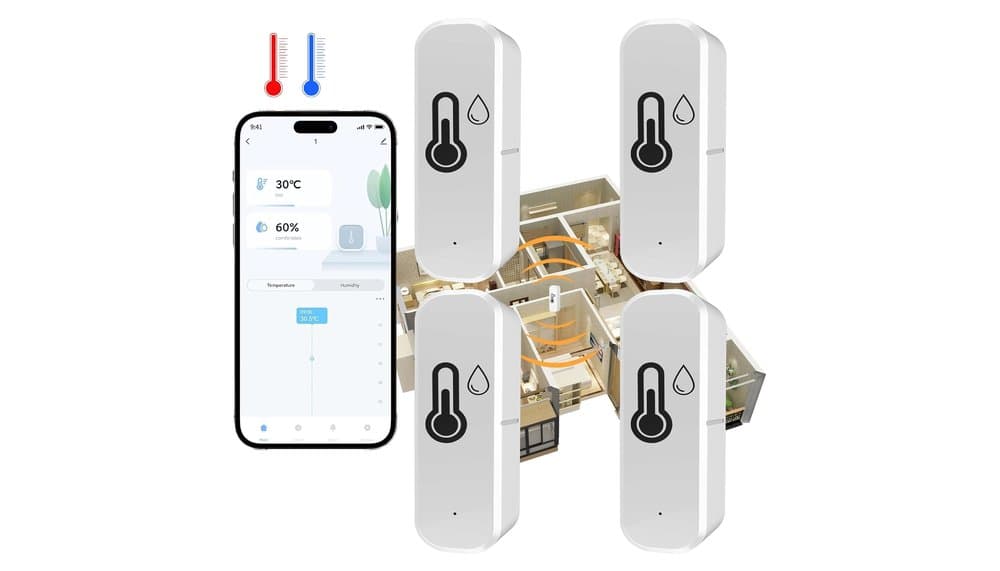
MLZTINGR Wifi Thermometer Hygrometer Review & Test
Monitor temperature & humidity for sous-vide, curing & fermentation with this affordable, wifi-connected sensor for precise, remote environmental tracking.
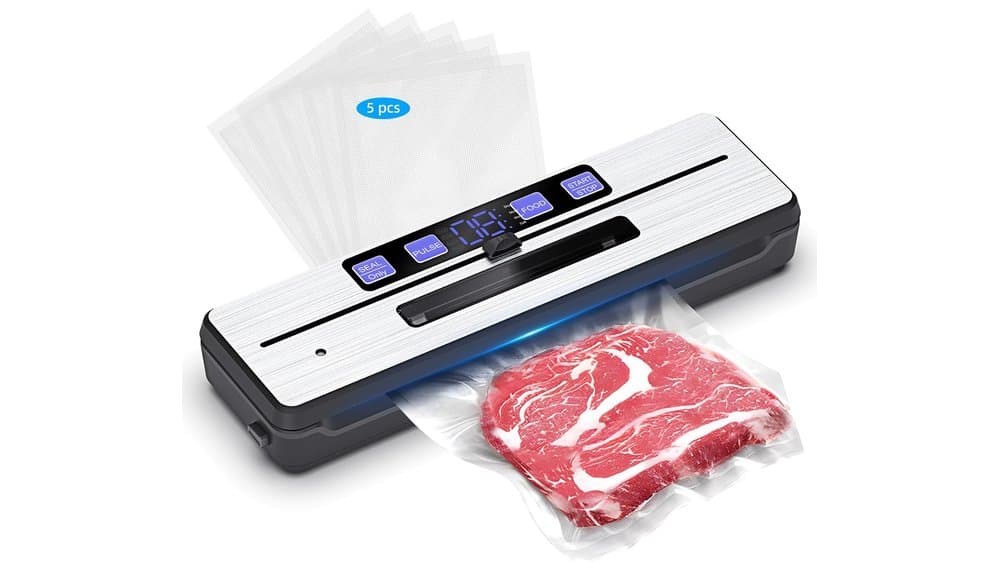
Carehabi V-Sealer Food Vacuum Machine Review
Test the Carehabi V-Sealer: a versatile, external-chamber vacuum machine for sous vide cooking and long-term food storage. Read our analysis.
Guides you might like
Bell Jar Vacuum Sealer Buying Guide
Upgrade to a chamber vacuum sealer for professional sous-vide results at home. Perfect for liquids and flawless, long-lasting seals.
Best Beginner Sous Vide Kit
Find the perfect sous-vide starter kit on a budget. Learn the three essential features to look for to cook your first perfect steak without the headache.
Best Vacuum Bags
Choose the right vacuum sealer bags for perfect results. Learn key specs like heat resistance, thickness, and barriers to avoid culinary disasters.