Taikuwu Dual LED Thermometer Review & Test
Introduction
For the cook venturing into the realm of precision cooking, temperature is not just a number: it's the foundation of reproducible results. Whether refining the texture of a salmon fillet sous-vide, controlling the aging temperature of homemade cheese, or verifying the stability of a bain-marie for a glaze, a reliable thermometer is as essential as a sharp knife. On paper, the Taikuwu Digital Thermometer Dual LED Display presents itself as a versatile and precise tool. But how does it perform in the demanding environment of precision cooking? Is it a simple gadget or a trustworthy measuring instrument for long cooks and critical applications? We will dissect its specifications, confront its promises with user feedback, and determine its real place in the arsenal of the modern cook, whether a seasoned enthusiast or a beginner in search of reliability.
Strengths
- Displayed and Validated Accuracy: The main argument for the Taikuwu is its advertised accuracy of 0.1°C. This resolution is exactly what a sous-vide enthusiast looks for to ensure their bath is stable at 57.2°C and not 57.5°C. User feedback, particularly within culinary temperature ranges, confirms this reliability.
- Dual Simultaneous Display: The ability to monitor two zones in real-time is a major asset. This allows, for example, comparing the core temperature of a piece of meat with that of the water bath, or checking the ambient temperature of a cheese cave while controlling that of a product being aged.
- Sensor Robustness: The NTC probe is described as waterproof IP67. This makes it compatible with humid environments like a bain-marie, an aquarium (for fermentation), or simply a quick cleaning, a non-negligible advantage in the kitchen.
- Fast Response Time: A data refresh every 500 ms (twice per second) guarantees near real-time tracking of temperature variations, essential for quick reaction when adjusting an appliance.
- Flexible Power and Low Consumption: Its wide power range (4-28V DC) and minimal electrical consumption (≤15 mA) make it an ideal candidate for permanent installations, powered by a small mains adapter or even a battery, without concern for overconsumption.
Weaknesses
- "DIY" Construction and Lack of Finish: Several users point out the lack of a protective rear casing and the fact that the electronic board is not treated against humidity. The device is designed to be integrated into a dashboard or a custom enclosure, not to be handled freely on a countertop. It is not a "plug-and-play" product in its native form.
- Cryptic Documentation and Wiring: The lack of a manual is a recurring complaint. The colors of the power wires do not follow an obvious standard (the + is not systematically red), and the function of the push button on the board is a mystery. This requires a certain level of technical resourcefulness.
- Potentially Limiting Cable Length: While the probes are 1 meter long, the power wires are only 15 cm. For flexible installation in a kitchen (e.g., near a bain-marie far from an outlet), an extension or soldering work will be necessary.
- Uneven Quality Control on Probes: A few reviews report calibration differences between the two probes (constant offset of 0.3°C) or, in rare cases, a defective probe upon receipt. This requires cross-checking upon purchase.
- Complete Lack of Smart Connectivity: Unlike modern kitchen thermometers, there is no Wi-Fi, no Bluetooth, no app. It is an analog measuring instrument at heart, displaying numbers on an LED screen. For remote monitoring or data logging, a separate system must be planned.
Detailed Analysis for Precision Cooking
Accuracy and Stability: The Heart of the Matter
On paper, the Taikuwu's specifications are perfectly aligned with the needs of precision cooking: an accuracy of 0.1°C and a wide measurement range that covers all culinary temperatures, from freezing (-55°C) to high-temperature sous-vide cooking (up to 120°C). The feedback from a user who tested it against medical mercury and alcohol thermometers between 35 and 41°C is clear: the maximum observed deviation was 0.2°C, which is excellent. For sous-vide cooking where stability of ±0.5°C is often sufficient, this performance is very reassuring. Long-term stability is not explicitly documented, but NTC (Negative Temperature Coefficient) technology is known for its stability. Its use in automotive applications (engine temperature monitoring) suggests good durability, but in the absence of data from specific 24h+ continuous tests, we rely on the perceived robustness of its industrial design.
Design and Ease of Integration
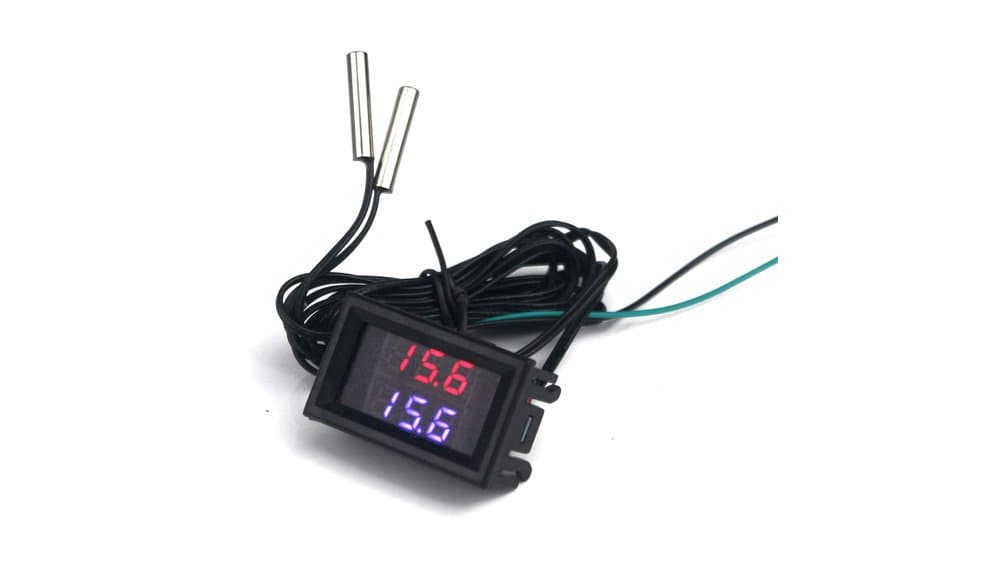
This is where the product reveals its true nature. The Taikuwu is not a traditional kitchen thermometer. It is an electronic module designed for integration. Its compact dimensions (48 x 29 x 22 mm) and bare design (exposed PCB) make it an ideal component for fixed installation: in the lid of a cooler converted into a fermentation chamber, integrated into a DIY control panel for a wine cellar, or mounted on a stand above a bain-marie. The DIY and tester community emphasizes that it is necessary to fabricate a protective case (from plexiglass, wood, or a waterproof box) to make it suitable for a kitchen environment where splashes and ambient humidity are common. Its dual LED display (typically red for probe 1, blue for probe 2) is very readable, even from a distance, a definite advantage.
Performance in Practical Scenarios
- For Sous-Vide: It excels as a verification and secondary monitoring thermometer. You can place one probe in your immersion circulator's bath to audit its real stability over 24 hours, and the other in a glass of water nearby to measure ambient variations. It does not replace a circulator, but it monitors it.
- For Fermentation and Aging: This is an ideal application. The waterproof probe can be placed in a fermentation vessel (yogurt, cheese, charcuterie) while the other measures the temperature of the cold room or the oven used as a proofing box. Its low consumption allows for power via an external battery for several days.
- For Frying Oil Control: The temperature range goes high enough (120°C) to monitor deep frying oil, although this is not its primary application.
- For Long Cooks: Its simple construction, without complex connectivity prone to failure, is a guarantee of reliability for multi-day sessions. The main point of caution will be the strength of the cable soldering at the module's entry point, which should be mechanically reinforced if the installation is likely to be handled.
Technical Specifications
| Parameter | Specification |
|---|---|
| Product Name | Taikuwu Digital Thermometer Dual LED Display |
| Measurement Range | -55°C to +120°C |
| Displayed Accuracy | 0.1°C (Resolution) |
| Real Accuracy (based on tests) | Approximately ±0.2°C to 0.3°C in the culinary range |
| Refresh Time | 500 ms |
| Included Probes | 2 x Waterproof IP67 NTC Probe (1 meter cable) |
| Power Supply | 4-28V DC (15 cm power cable included) |
| Consumption | ≤ 15 mA |
| Module Dimensions | 48 x 29 x 22 mm |
| Display | Dual LED screen (typically Red/ Blue) |
| Connectivity | None (no Wi-Fi, no Bluetooth) |
| Construction | Exposed PCB, no rear casing |
What Users Say
The synthesis of customer reviews and DIY expert feedback draws a clear consensus around this product.
The recurring positive points revolve around reliability and perceived value for money. Users are unanimously satisfied with the accuracy of measurements once the device is correctly installed. The readability of the LED display and the fast response time are also highly appreciated. DIYers, particularly those using it for automotive applications (car interior/exterior temperature) or for monitoring heating systems, praise it for its functional simplicity and efficiency. The inclusion of two waterproof probes is seen as a real plus.
Criticisms essentially concern the unboxing and installation experience. The complete lack of documentation is the number one complaint, making the connection (polarity of power wires, probe association) confusing for a non-initiated user. The "bare" construction (unprotected electronic board) is a shock for many who expected a finished case. A few users received a defective probe or note a slight calibration offset between the two probes, although this remains within the advertised error margins. The very short length of the power cable is regularly mentioned as a design flaw for flexible installation.
In summary, the community validates its metrological performance but warns that it is a product for tinkerers, requiring a minimum of electrical knowledge and a willingness to finish it (case, extensions) for optimal and safe use.
Conclusion
The Taikuwu Digital Thermometer Dual LED Display is a tool that doesn't lie about its pedigree. It's a precise and robust industrial measurement module, dressed as a consumer product. Its analysis reveals a tool extremely competent in substance – the reliable and fast measurement of temperature – but perfectible in form.
For the precision cooking enthusiast who enjoys tinkering, it's a gem. It offers laboratory-grade accuracy at a modest cost, and the possibility to customize it (custom case, fixed installation in a dedicated kitchenette) makes it a unique instrument perfectly adapted to specific needs. It is ideal as a trusted thermometer for auditing equipment, monitoring a fermentation chamber, or tracking a long cook with two measurement points.
Conversely, for the beginner or someone looking for a turnkey solution, ready to be taken out of the box and used immediately on the countertop, this product will be a source of frustration. The lack of a case, manual, and cryptic wiring make it a project, not a finished product.
Our verdict is therefore nuanced but positive for this site's target audience. If you are comfortable with a screwdriver, a drill, and some basic wiring knowledge, the Taikuwu represents a wise investment to add a layer of trust and professional monitoring to your precision cooking setup. It is an excellent sensor, which simply asks to be carefully integrated into your culinary ecosystem.
100% free and independent — All our articles are written independently, without any sponsorship. We may earn a commission on purchases made through our links, at no extra cost to you.
Articles you might like
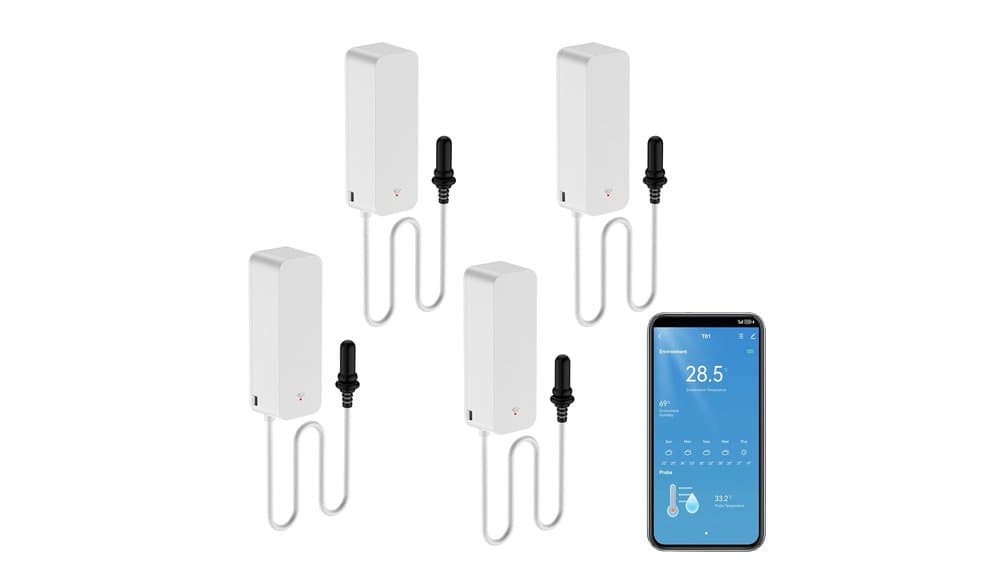
PHOVOLT WiFi Thermometer with Probe Test
For precise sous-vide & charcuterie, a calibrated core temperature probe is essential to ensure perfect results where it matters most.
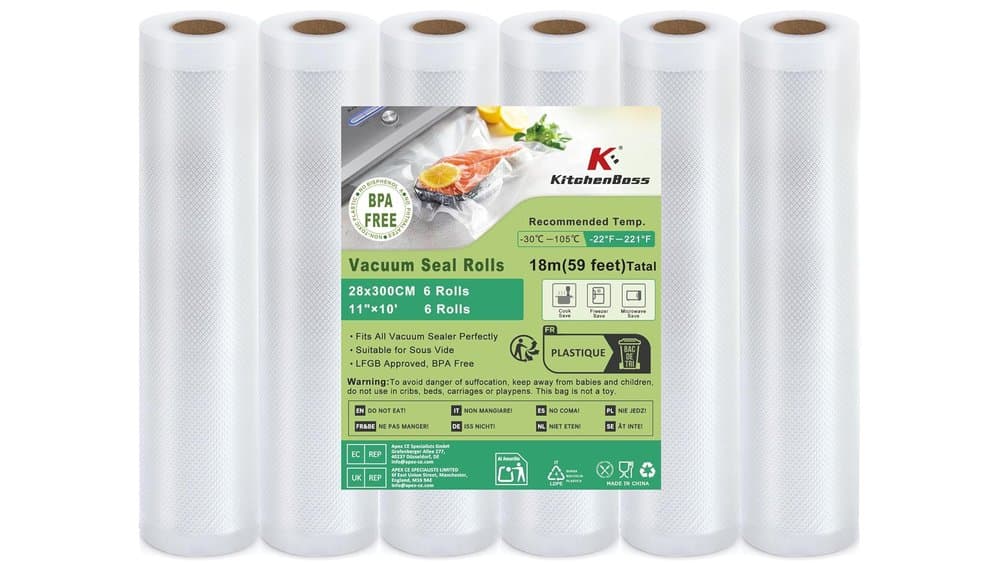
KitchenBoss Food Vacuum Bag Roll Review & Test
KitchenBoss vacuum sealing bags for sous-vide: analyze specs, compare performance, and determine value for precision cooking storage and preparation.
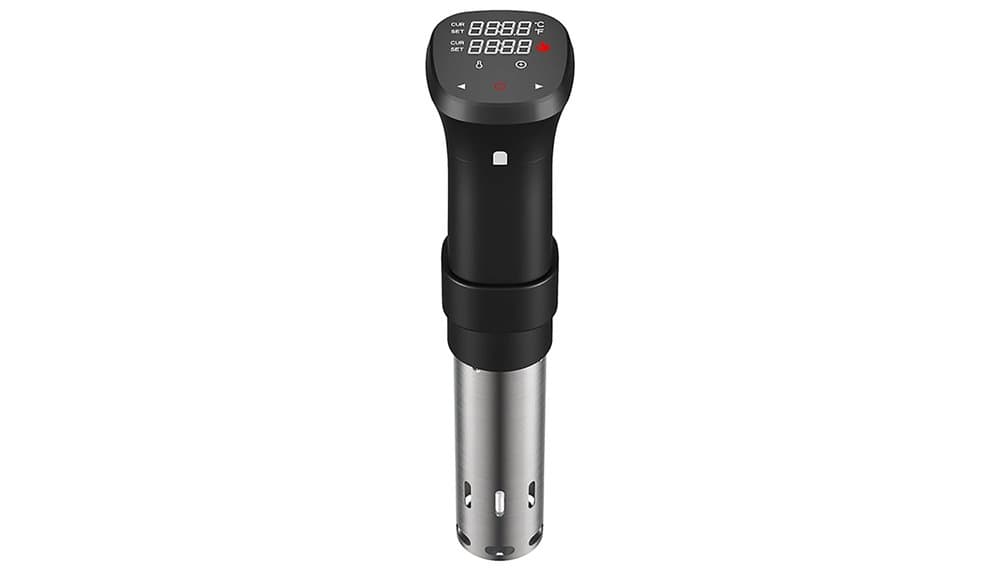
Fityou HU-XI-53 Immersion Circulator Sous Vide Cooker Review
Fityou HU-XI-53 Immersion Circulator review: A high-performing, accessible sous vide cooker with 1100W power, precise 0.1°C accuracy, and a 25-95°C range.
Guides you might like
Bell Jar Vacuum Sealer Buying Guide
Upgrade to a chamber vacuum sealer for professional sous-vide results at home. Perfect for liquids and flawless, long-lasting seals.
Best Beginner Sous Vide Kit
Find the perfect sous-vide starter kit on a budget. Learn the three essential features to look for to cook your first perfect steak without the headache.
Best Vacuum Bags
Choose the right vacuum sealer bags for perfect results. Learn key specs like heat resistance, thickness, and barriers to avoid culinary disasters.