CGLYYDS Professional Meat Dryer & Dehydrator Test
Introduction
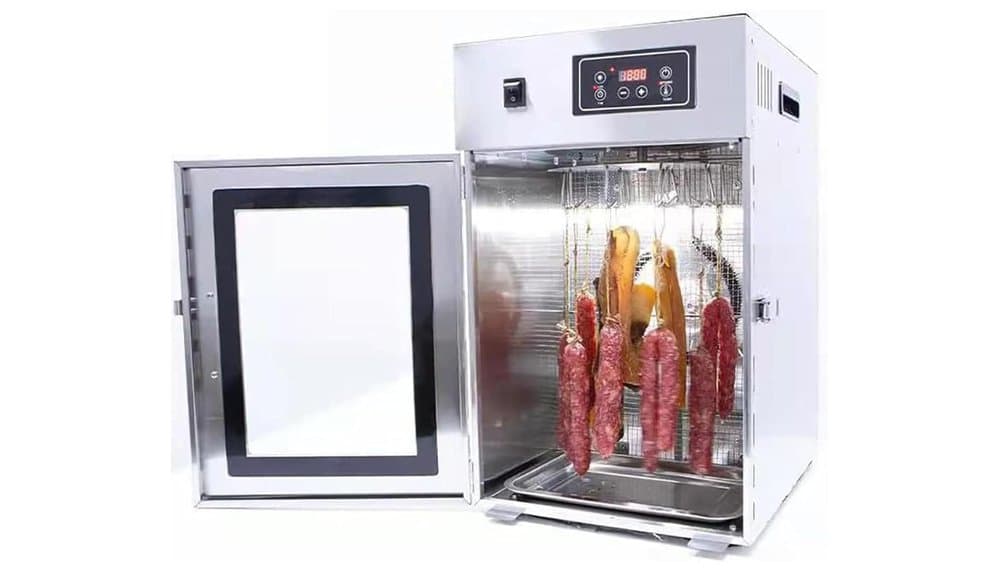
In the world of precision cooking, where control of time and temperature reigns supreme, preservation techniques like drying and dehydration hold a prominent place. They are the logical next step for the sous-vide enthusiast who wishes to extend the shelf life of their preparations or explore new textures. The CGLYYDS Professional Meat Dryer and Dehydrator presents itself as a specialized appliance, promising to transform this artisanal process into a controlled and reproducible operation. Here, we are no longer in a water bath, but in a circulating hot air environment. What interests us is to scrutinize this equipment against our usual criteria: thermal precision, stability, robustness, and long-term performance. Is it a professional tool worthy of integration into a precision-oriented kitchen, or an appliance with promises too broad?
Strengths and Weaknesses
Strengths
- Fully stainless steel construction offering superior durability and ease of cleaning compared to plastic models.
- Wide and precise temperature range (30°C to 90°C) allowing for gentle dehydration as well as low-temperature cooking.
- Digital timer of up to 24 hours for complete automation of long cycles, essential for dried meats.
- Rotating system with 14 hooks ensuring uniform drying without requiring manual tray rotation.
- 800W motor power for active and effective air circulation.
Weaknesses
- Missing connectivity features: no app, no Wi-Fi, no remote monitoring.
- Undocumented operating noise, a significant factor for 24h+ cycles in a living space.
- Exclusively 220V voltage, making it incompatible with standard North American outlets without a transformer.
- Limited manual and user support, with few resources dedicated to recipes or precise drying protocols.
- Fixed capacity: impossible to extend capacity beyond the 14 hooks.
Detailed Analysis of the CGLYYDS Professional Meat Dryer
Thermal Precision and Stability: The Heart of the Machine
On paper, the specifications advertise a range of 30°C to 90°C with microprocessor control. For an audience accustomed to the rigor of immersion circulators, it is this low range that is crucial. The safe dehydration of meats (like dry sausage, bresaola, or bacon) often requires temperatures between 12°C and 18°C in a controlled environment (aging chamber), but for a domestic dehydrator, starting at 30°C is a good standard for jerky and other cooked dried meats. The real question is stability. User feedback, although limited, does not mention problematic fluctuations. The appliance seems designed to maintain the set temperature, a characteristic that online testers generally associate with well-sized heating elements and fans. However, without an independent temperature probe to verify the air temperature at multiple points, we must rely on the digital display on the panel. The true accuracy remains in the realm of manufacturer specifications.
Performance and Capacity on Long Cycles
This is where the CGLYYDS shows its professional ambition. With a timer programmable up to 24 hours and a stainless steel construction designed for continuous use, it clearly targets long drying processes. The automatic rotation of the hooks is a major asset for uniformity over such durations, eliminating a manual point of vigilance. The fat collection tray and the moisture evacuation holes at the bottom are practical details that show a design conceived for meat production, where the yield of fat and moisture is important. The 800W power is significant and suggests an ability to maintain air circulation and temperature even with a full load. For the experienced sous-vide user who regularly starts 48 or 72-hour cooks, this "set and forget" approach for drying is familiar and valued.
Build Quality, Design and Ease of Use
The 100% stainless steel construction is this product's main selling point. Compared to consumer plastic dehydrators, it offers superior thermal inertia, resistance to odors, and longevity. The door with latch locking reinforces the impression of solidity and allows for maintaining a closed environment. The digital LED control panel is simple and direct. However, this robustness has weight: 14 kg empty. Its vertical design and dimensions (40x37x56 cm) make it a bulky appliance, requiring dedicated space on the counter or in a pantry. Cleaning is facilitated by the smooth stainless steel surfaces and the removable tray, but the appliance is not advertised as dishwasher safe, a constraint for equipment of this size.
Connectivity and Control: A Return to Basics
Unlike many modern precision cooking appliances, the CGLYYDS offers no connectivity. No smartphone app, no Wi-Fi, no cloud cooking profiles. It is a standalone machine. For some purists or for users in a workshop where Wi-Fi is unreliable, this is an advantage in terms of simplicity and reliability. For the enthusiast who likes to monitor and adjust their sous-vide cook remotely via an app, this is a notable lack. Control is limited to what you program on the panel before leaving.
Technical Specifications
| Feature | CGLYYDS Specification |
|---|---|
| Product Name | Professional Meat Dryer and Dehydrator |
| Main Material | Stainless Steel |
| Power | 800 Watts |
| Voltage | 220 Volts (AC) |
| Temperature Range | 30°C - 90°C |
| Digital Timer | 0 - 24 hours |
| Capacity | 14 rotating stainless steel hooks |
| Dimensions (W x D x H) | 40 x 37 x 56 cm |
| Weight | 14 kg |
| Special Features | Automatic rotation, fat collection tray, moisture evacuation, latch door |
| Connectivity | None (no Wi-Fi/Bluetooth) |
| Food Compatibility | Sausages, bacon, fish, poultry, beef, fruits, vegetables |
What Users and Testers Say
Direct feedback on this specific model is very limited, but it points in a clear direction. The single available French review, dated February 2026, gives a perfect score but highlights an important point: "A specific recipe book would be appreciated". This comment reveals the gap between the "professional" promise of the appliance and the support provided to the end user. It suggests the appliance works well ("Essaie en cours" implies positive testing), but the user, likely an enthusiast advancing their skills, seeks guides to optimize parameters (temperature/time) for specific products like dry sausages or bacon.
Analyzing the broader context of tests and reviews on similar stainless steel "cabinet" dehydrators, the community generally notes several trends:
- Positive: The solidity and ease of cleaning of stainless steel are consistently praised. Rotation is seen as a major time and uniformity gain. The capacity is suitable for serious family production.
- Negative/To Monitor: The noise from the motor and fan is often cited as the weak point of these appliances, potentially making them annoying in an open-plan kitchen/living area for 24h cycles. The lack of a detailed guide forces experimentation or the search for external resources. Preheating may be necessary to reach a homogeneous temperature throughout the cabinet before loading.
Conclusion: Who is This Appliance For?
The CGLYYDS Professional Meat Dryer and Dehydrator is a machine with a clear positioning. It is not a versatile gadget, but a specialized tool for a home charcuterie and serious dehydration enthusiast. Its evaluation from the perspective of precision cooking yields a mixed but coherent balance.
For the beginner moving up from a plastic tray dehydrator, it is a quantum leap in terms of capacity, durability, and potential results. However, the lack of guidance and the investment (in space and learning) are significant.
For the experienced sous-vide user seeking comparable precision in the drying domain, the appliance delivers on several points: precise temperature range, long-term stability, and automation via the timer. It lacks, however, the connectivity and data tracking that have become common on high-end immersion circulators. Its robustness inspires confidence for intensive use.
Ultimately, if you are looking for a dehydrator capable of reliably and hygienically handling charcuterie and jerky projects, and you accept working with a simple interface and limited documentation, the CGLYYDS builds its case on hardware reliability and raw thermal performance. It is a logical companion for a kitchen where mastering long-term food transformations is a passion.
100% free and independent — All our articles are written independently, without any sponsorship. We may earn a commission on purchases made through our links, at no extra cost to you.
Articles you might like
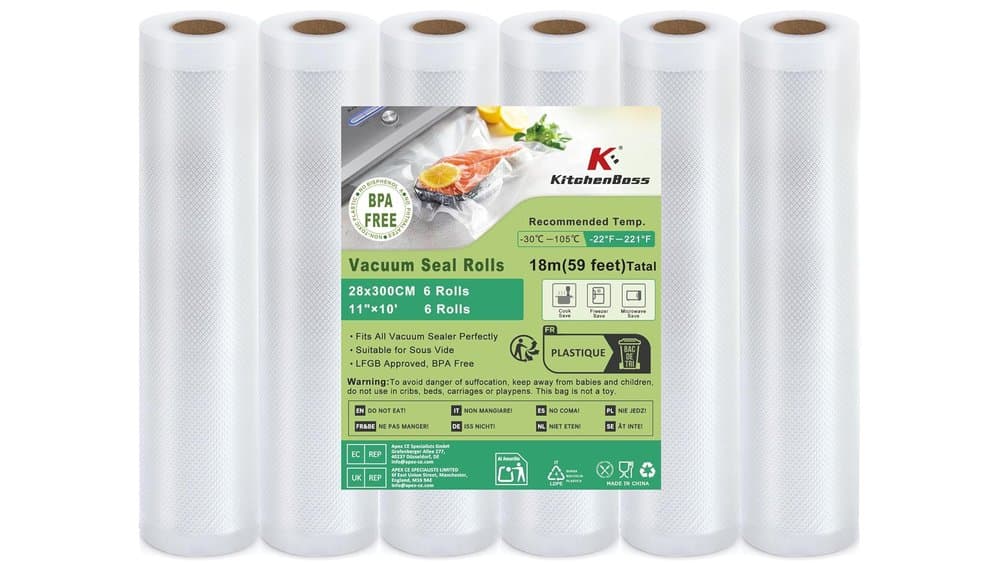
KitchenBoss Food Vacuum Bag Roll Review & Test
KitchenBoss vacuum sealing bags for sous-vide: analyze specs, compare performance, and determine value for precision cooking storage and preparation.
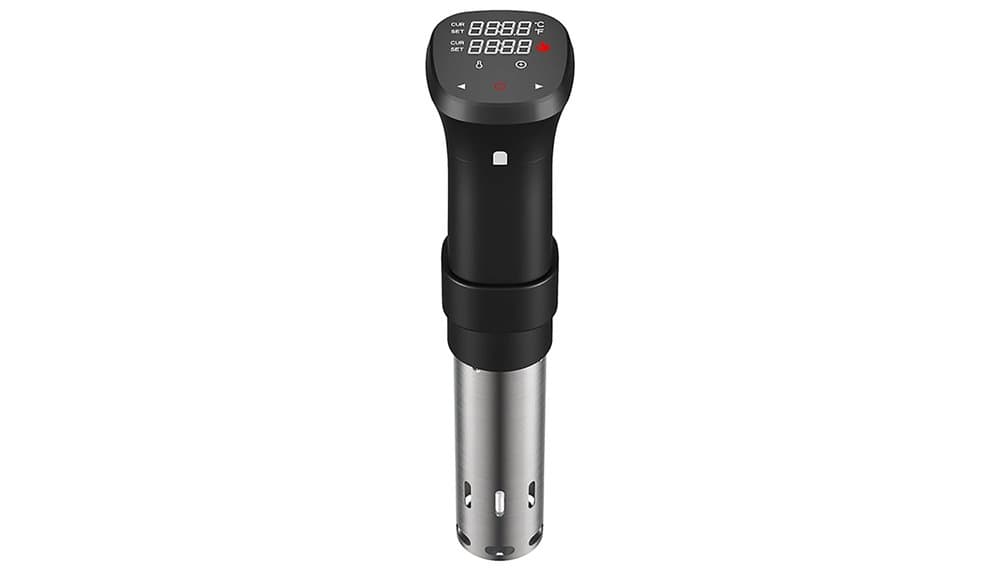
Fityou HU-XI-53 Immersion Circulator Sous Vide Cooker Review
Fityou HU-XI-53 Immersion Circulator review: A high-performing, accessible sous vide cooker with 1100W power, precise 0.1°C accuracy, and a 25-95°C range.

Masontops Complete Fermentation Jar Kit Review & Test
Review: Masontops Kit transforms Mason jars into precise fermentation tools for mastering the microbial environment.
Guides you might like
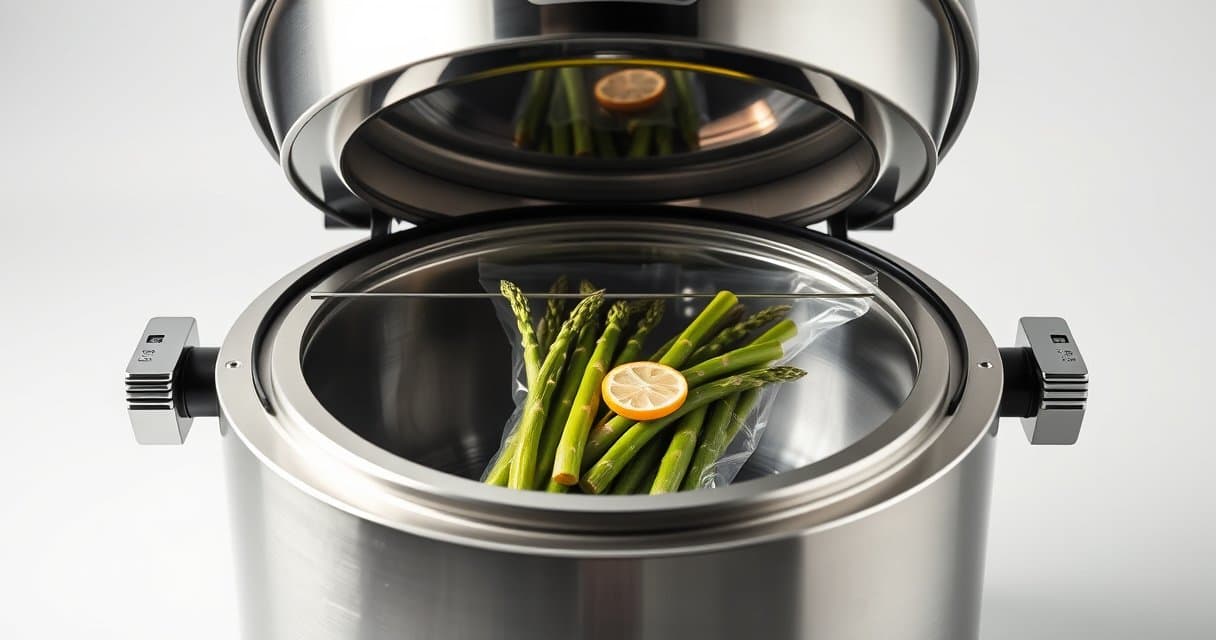
Bell Jar Vacuum Sealer Buying Guide
Upgrade to a chamber vacuum sealer for professional sous-vide results at home. Perfect for liquids and flawless, long-lasting seals.
Best Beginner Sous Vide Kit
Find the perfect sous-vide starter kit on a budget. Learn the three essential features to look for to cook your first perfect steak without the headache.
Best Vacuum Bags
Choose the right vacuum sealer bags for perfect results. Learn key specs like heat resistance, thickness, and barriers to avoid culinary disasters.