Buffalo DM868 Immersion Heater Review & Performance Test
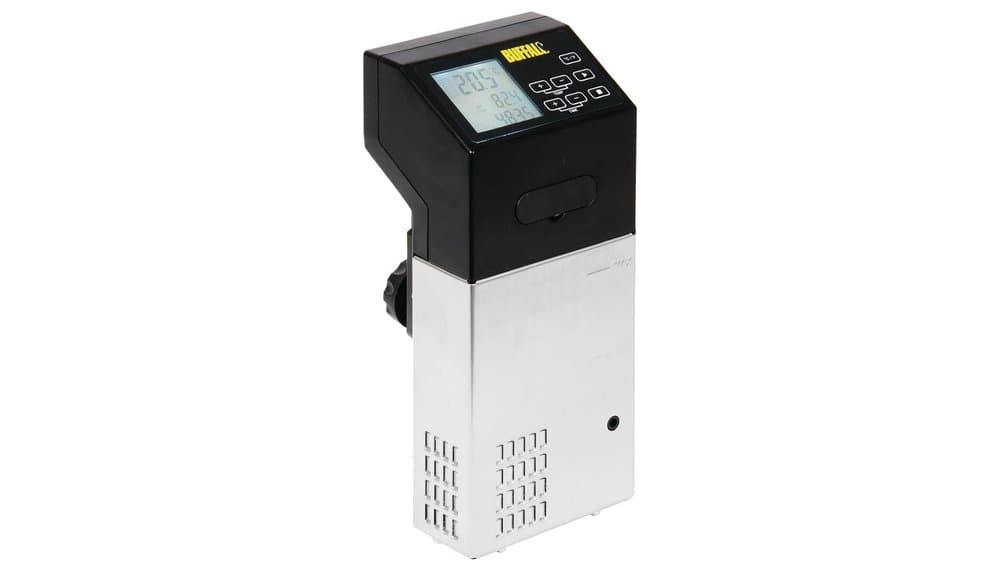
Introduction: The Performance Budget Heater Gamble
The Buffalo DM868 Immersion Heater Sous Vide is a device that stands out on the immersion circulator market. Launched in 2014, it represents an older proposition that continues to attract with seemingly solid technical characteristics at a contained price. It is a product that aims to combine power, simplicity, and robustness, without the frills of modern connectivity. In this article, we will dissect this machine from the perspective of precision cooking, evaluating what it promises on paper, what it delivers according to its users, and whether it constitutes a wise choice for a beginner or a seasoned enthusiast.
Strengths and Weaknesses
Before diving into details, here is a synthetic overview of the strengths and pitfalls of the Buffalo DM868.
Strengths:
- Power and heating speed: A 1500W power that often surpasses entry-level models, allowing for quick heating of a water bath.
- Advertised precision: An announced control precision of ±0.5°C, in line with serious sous-vide cooking standards.
- Simplicity of use: Direct touch interface, without reliance on a smartphone app, for immediate use.
- Large capacity: Suitable for containers up to 40 liters, capable of handling large cuts or multiple portions.
- Initial value for money: Performance perceived as high for its launch price.
Weaknesses:
- Long-term reliability questioned: Durability emerges as the major downside in feedback, with failures reported after a few months to a few years.
- Lack of connectivity: No Wi-Fi, Bluetooth, or application. A drawback for those who want to control and monitor remotely.
- Recurring manufacturing defects: Several users report issues with the circulation pump stopping or the touch screen becoming faulty.
- Uncertain after-sales support: The availability of spare parts and ease of obtaining warranty service seem unclear, causing frustration.
- Aging design: Dated conception, without modern improvements like backlit screens or more sophisticated universal clamps.
Detailed Analysis of the Buffalo DM868
Precision and Thermal Stability: Promises Kept... When It Works
On paper, the specs of the Buffalo DM868 are quite respectable. The advertised precision of ±0.5°C matches what is necessary for reliable sous-vide cooking, whether for a delicate salmon fillet or a 24-hour bourguignon. User feedback generally confirms this initial assertion. Several testers and customers comparing with independent probes note excellent temperature stability, with minimal variations (around 0.5°C) quickly corrected by the device. The 1500W power is an undeniable asset for reaching the target temperature faster than less powerful models, reducing preheating time, especially for large volumes.
However, this thermal performance is conditional on the device functioning well over the long term. The question is not "is it precise?" but "does it remain precise and functional in the long run?"
Performance on Long Cooks and Circulation Flow
The Buffalo DM868 is presented as suitable for containers up to 40 liters. Its power suggests it can maintain temperature even in a large volume. For long cooks of 24 hours or more, two elements are critical: thermal stability (already validated when the device works) and the reliability of the circulation pump. This is where the main issue lies according to the community.
The pump flow rate is not quantified in the specifications, but its role is crucial: ensuring perfect temperature homogeneity throughout the bath. Several reviews report a circulation pump failure after only a few months of moderate use. For a long cook, such a failure is catastrophic, leading to cold spots and uneven cooking, or even a complete halt of the cook. If the device does not break down, satisfied users describe it as relatively quiet, which is an advantage for prolonged cooks in open-plan kitchens.
Build Quality, Clamp Design, and Noise
The stainless steel construction gives an initial impression of solidity and facilitates cleaning, as noted in technical sheets. The design is simple, without unnecessary features.
The mounting clamp is designed to fit flat or rounded edges, offering some versatility. However, some users note that it may lack robustness or grip compared to newer models. Its minimum mounting height is not specified, which can be a drawback for small containers.
Regarding noise level, most feedback describes it as low to moderate, which is a positive point. No user reports it as particularly loud, indicating that its pump, when functioning, is discreet.
Connectivity and Interface: The Digital Stone Age
This is the characteristic that most clearly marks this product's generation: it has no connectivity. No Wi-Fi, no Bluetooth, no dedicated app. The interface is limited to an LCD touch screen and buttons for setting time and temperature.
This simplicity is an asset for purists or those who want a "plug and play" device without digital complications. However, for the modern user or the enthusiast who wants to program a cook remotely, monitor progress from the sofa, or access recipe libraries, it is a glaring omission. Furthermore, several reviews report problems with the touch screen becoming erratic or suddenly displaying degrees Fahrenheit with no way to revert, rendering the device unusable.
Technical Specifications
| Feature | Buffalo DM868 Specification |
|---|---|
| Device Type | Immersion Heater (Circulator) |
| Power | 1500 Watts |
| Max. Capacity | 40 liters |
| Temperature Range | 5°C to 99°C |
| Advertised Precision | ±0.5°C |
| Control | LCD Touch Screen |
| Connectivity | None (Wireless) |
| Water Circulation | Integrated pump (flow rate unspecified) |
| Main Construction | Stainless Steel |
| Weight | 1.8 kg |
| Power Supply | Corded |
What Users Say: A Mixed Picture
Analyzing available customer reviews and expert feedback paints a mixed picture of the Buffalo DM868.
Praise primarily concerns its initial performance. Satisfied users highlight its excellent value for money for accessing sous-vide cooking, its fast heating power, its verified precision, and its quiet operation. Many appreciate its simplicity of use without a superfluous app. Phrases like "simple & effective" or "a real, not-too-expensive solution" summarize this initial enthusiasm well.
Recurring criticisms, however, are almost exclusively related to reliability and durability. Several testimonials report premature failures, sometimes after only "a few months" or "about thirty uses." The most frequently cited problems are:
- Failure of the circulation pump, stopping water homogenization.
- Failure of the touch screen, with the display freezing or switching to Fahrenheit irreversibly.
- Perceived planned obsolescence with difficult-to-find after-sales support once the legal warranty expires, leaving the user with a dead device.
The overall rating of 3.7/5 stars is revealing: one third of reviews are 1 star, often due to these reliability issues. This creates polarization between those who received a functional device and are delighted with it, and those who faced a rapid breakdown and had a very poor experience.
Conclusion: A Risky Bet, Depending on Your Priorities
The Buffalo DM868 Immersion Heater Sous Vide is an ambivalent product. On one hand, it offers solid technical specifications (1500W, ±0.5°C, 40L) for a modest initial investment, making it very attractive for a beginner wanting to discover precision cooking without breaking the bank. Its simplicity is also a strength for those who refuse app complexity.
However, analyzing community feedback imposes a serious warning about its mid-term reliability. Repeated failures of the pump and screen, coupled with after-sales support perceived as uncertain, make it a risky investment. For an enthusiast planning to use their immersion circulator regularly, especially for long cooks, this uncertainty is a deal-breaker.
Our final verdict: The Buffalo DM868 can be considered a budget-startup option, but with a sharp awareness of the risk. If you are willing to accept the risk of a potentially limited lifespan to benefit from good immediate performance, it could suffice. Conversely, for any regular user or for someone seeking a reliable and durable tool for years of precise cooking, the longevity concerns push towards looking at brands offering more established build quality and after-sales service, even at a slightly higher price. In the current sous-vide cooking ecosystem, this model suffers from its age and a quality control that does not seem to match its initial technical promises.
100% free and independent — All our articles are written independently, without any sponsorship. We may earn a commission on purchases made through our links, at no extra cost to you.
Articles you might like
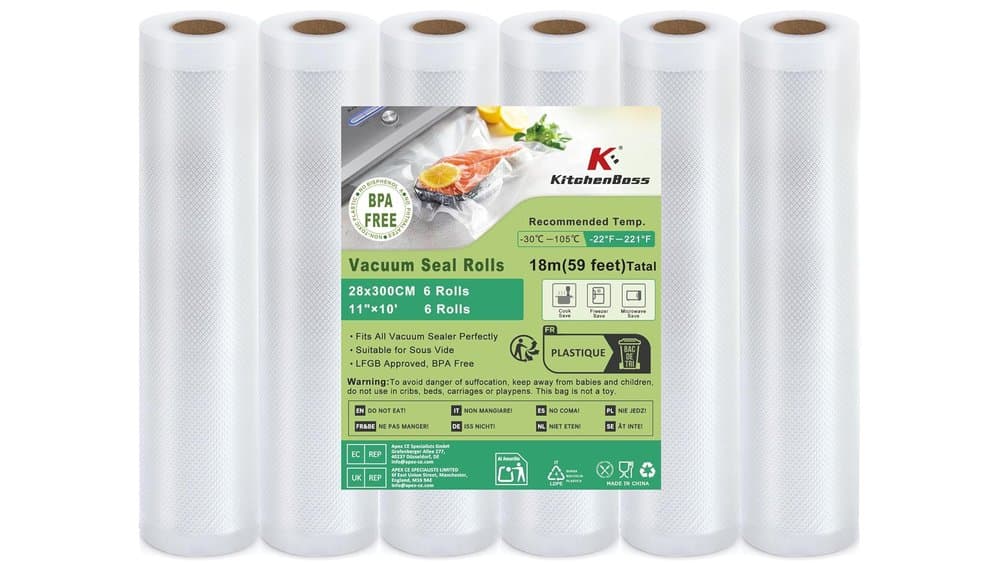
KitchenBoss Food Vacuum Bag Roll Review & Test
KitchenBoss vacuum sealing bags for sous-vide: analyze specs, compare performance, and determine value for precision cooking storage and preparation.
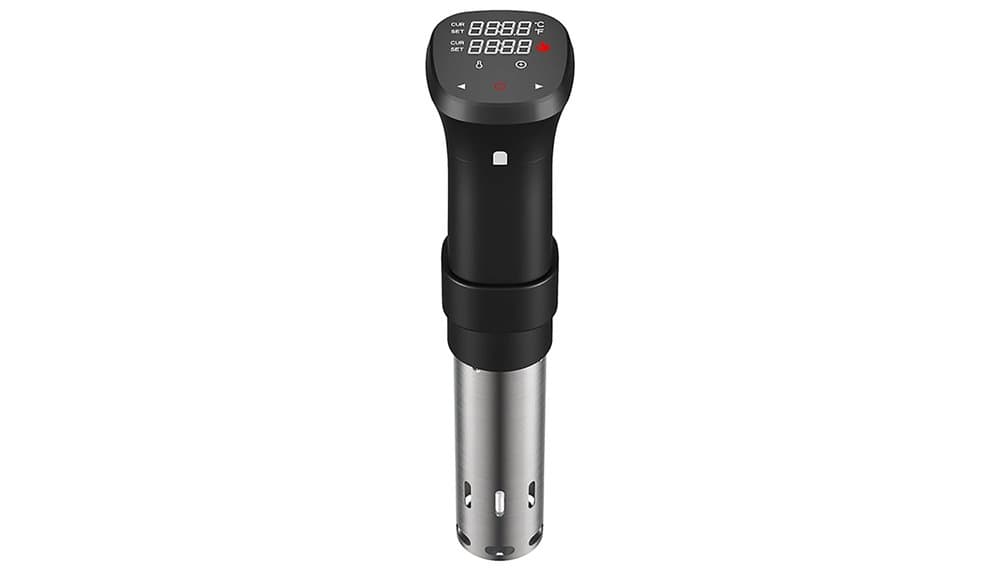
Fityou HU-XI-53 Immersion Circulator Sous Vide Cooker Review
Fityou HU-XI-53 Immersion Circulator review: A high-performing, accessible sous vide cooker with 1100W power, precise 0.1°C accuracy, and a 25-95°C range.
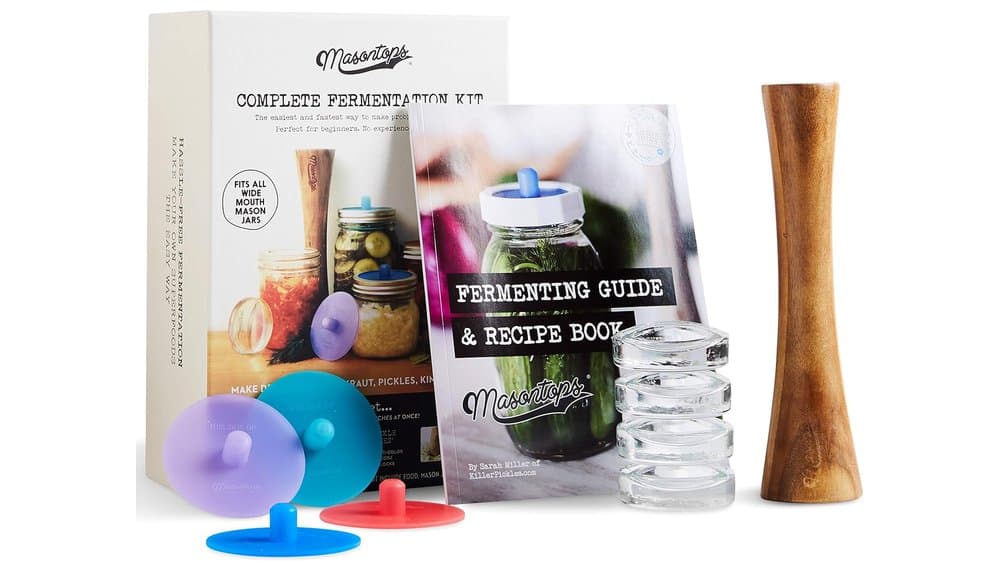
Masontops Complete Fermentation Jar Kit Review & Test
Review: Masontops Kit transforms Mason jars into precise fermentation tools for mastering the microbial environment.
Guides you might like
Bell Jar Vacuum Sealer Buying Guide
Upgrade to a chamber vacuum sealer for professional sous-vide results at home. Perfect for liquids and flawless, long-lasting seals.
Best Beginner Sous Vide Kit
Find the perfect sous-vide starter kit on a budget. Learn the three essential features to look for to cook your first perfect steak without the headache.
Best Vacuum Bags
Choose the right vacuum sealer bags for perfect results. Learn key specs like heat resistance, thickness, and barriers to avoid culinary disasters.