Amazon Basics Vacuum Sealer Rolls Review & Test

Introduction: Analysis of a Base Product for a Precision Technique
In the world of sous-vide cooking, the bag and the seal are not mere accessories; they are the critical container that guarantees the success of the technique. A faulty seal or a material that degrades can ruin a 72-hour piece of meat and compromise food safety. Our analysis today focuses on a product designed to be the interface between our food and the hot water: the Amazon Basics Vacuum Sealer Rolls, Pack of 2. These are rolls of plastic film designed to create custom-sized bags using a vacuum sealer. We will evaluate them not as a standard consumer product, but from the demanding perspective of precision cooking. Their resistance to prolonged heat, their compatibility with different devices, and their ability to maintain a perfect vacuum are criteria that will make the difference between a flawless result and a disappointment.
Strengths and Weaknesses
Strengths
- Economy and Flexibility: The ability to create custom-sized bags tailored to the exact size of the food minimizes film waste, a significant financial argument for frequent cooking.
- Broad Stated Compatibility: The manufacturer lists an impressive range of compatible sealer brands, from entry-level models to more specialized brands, promising easy integration.
- Strength Promise: Described as "incredibly strong and tear-resistant," they are presented as capable of supporting the weight of foods with bones or sharp edges and handling during long cooks.
- Versatility of Use: The BPA-free material is advertised as suitable for freezing, microwaving, and immersion in boiling water, covering the entire process of sous-vide preparation, cooking, and reheating.
Weaknesses (based on feedback)
- Recurring Sealing Issues: A frequent criticism in the community concerns the quality of the seal. The edges of the film sometimes seem to have an uneven layer or incompatible material that prevents a reliable, airtight seal.
- Poor Moisture Management: For moist or marinated foods, a crucial point in sous-vide, many users report that the film struggles to seal properly, leading to vacuum failures or liquid being sucked into the sealer.
- Practical Incompatibilities: Despite the long compatibility list, feedback notes that the film does not melt and seal optimally with certain sealer models, particularly FoodSaver, even though they are cited.
- Inconsistent Manufacturing Quality: Users report variations between batches, with some rolls being thinner, stickier, or having edges that are not perfectly straight, harming reliability.
Detailed Analysis from a Sous-Vide Cooking Perspective
Performance on Long Cooks (24h+)
This is the ultimate test for a vacuum bag. The precision cooking user community is divided. When the sealing is successful, the Amazon Basics film generally holds up: it does not delaminate, puncture, and withstands the constant temperatures typical of sous-vide (usually between 50°C and 85°C). However, it is the initial condition – a perfect seal – that is problematic. An imperfect vacuum due to a faulty seal leads not only to a loss of culinary quality (the meat may sit in its juices without intimate contact with the bag), but also to a bacteriological risk by creating an air pocket where anaerobic bacteria could thrive. Long-term reliability is therefore conditional on the success of this first step, which seems random according to feedback.
Suction Power and Seal Integrity
Unlike a chamber sealer, an external sealer pulls its vacuum through the edge of the bag. The quality of the film directly impacts this operation. According to feedback, the Amazon Basics film can, in some cases, allow a satisfactory vacuum. Nevertheless, where it shows a marked weakness is with moist foods. The material and/or its sealing layer seem to poorly evacuate residual moisture on the lip of the bag, leading to seals that fail or a partial vacuum. For meats one wishes to marinate sous-vide or washed vegetables, this characteristic becomes a limiting factor. Food preservation experts stress that optimal vacuum is essential to avoid freezer burn and maximize shelf life; the reported sealing failures are therefore a serious handicap for this use.
Compatibility and User-Friendliness
The promise of universal compatibility is ambitious. In practice, it seems most effective with sealers of simple design, often entry-level models. Problems arise mainly with brands like FoodSaver, which use heat and pressure protocols perhaps calibrated for their own films. For a beginner, the risk is to think their device is at fault when it is the material incompatibility with the film that is the issue. For the experienced user with multiple machines, this means potentially having to "test" the roll and adjust their sealer's settings, thus losing the advantage of simplicity and predictability. The roll dimensions (30cm wide) are standard and suitable for most domestic sealers.
Manufacturing Quality and Safety
The material is advertised as BPA-free, which is a minimum requirement for food contact, especially in hot cooking. The tear resistance, when the film is well-made, is generally praised. However, reports of variations in film thickness or texture between batches raise questions about quality control. In sous-vide, where repeatability and trust are paramount, this inconsistency can be a deal-breaker. "Sticky" film that does not unroll easily or with edges that are not clean unnecessarily complicates the bagging process.
Technical Specifications
| Feature | Detail for Amazon Basics Vacuum Sealer Rolls |
|---|---|
| Contents | 2 rolls of film |
| Dimensions per roll | 30 cm (width) x 600 cm (length) |
| Material | BPA-free Plastic |
| Color | Clear with a green band (sealing guide) |
| Advertised Uses | Freezing, sous-vide cooking (immersion), microwave, boiling water |
| Sealing Principle | Heat seal (requires an external sealer) |
| Advertised Compatibility | Standard external vacuum sealers (long list including FoodSaver, Krups, etc.) |
| Main Selling Point | Economy via creation of custom-sized bags, reusable |
What Users and the Community Say
A synthesis of customer feedback and online discussions reveals a mixed picture, where operational disappointment often outweighs the economic argument.
The recurring positive points revolve around cost-effectiveness. Satisfied users appreciate the low price per square centimeter and the possibility of creating large bags for bulky items (beef ribs, whole fish). When the seal works, they find the film strong enough and transparent, allowing clear visibility of the contents. Some with specific sealer models (less common)
100% free and independent — All our articles are written independently, without any sponsorship. We may earn a commission on purchases made through our links, at no extra cost to you.
Articles you might like
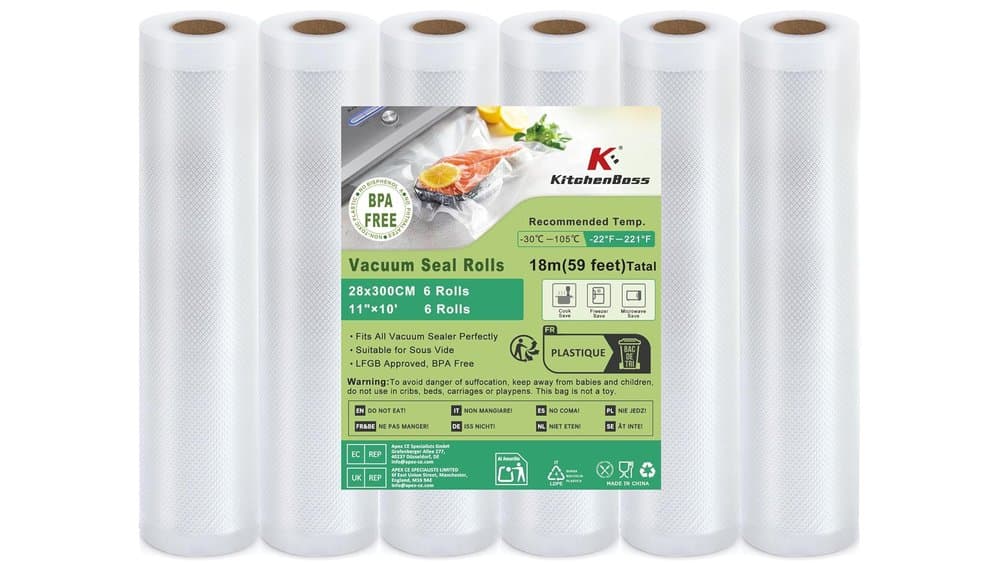
KitchenBoss Food Vacuum Bag Roll Review & Test
KitchenBoss vacuum sealing bags for sous-vide: analyze specs, compare performance, and determine value for precision cooking storage and preparation.
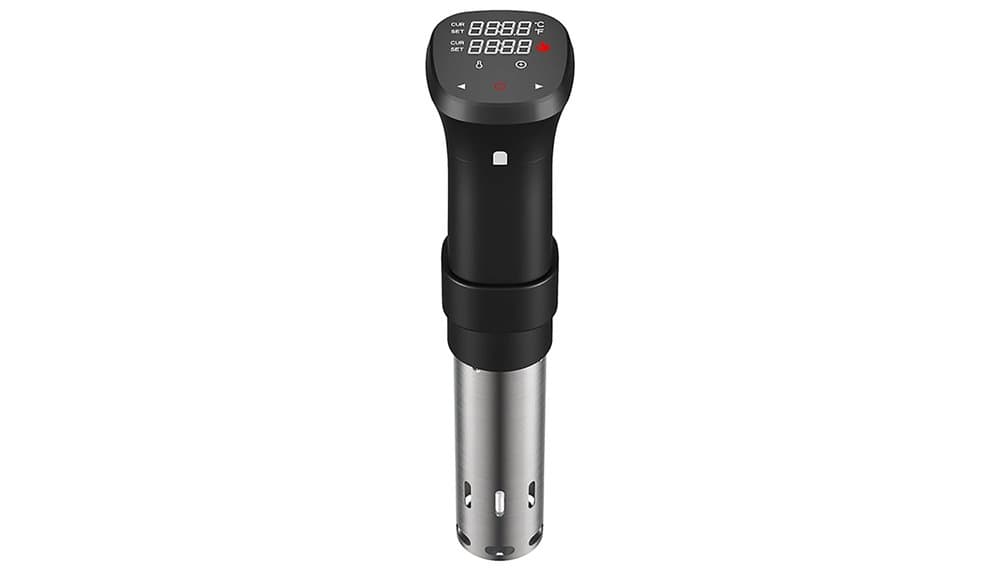
Fityou HU-XI-53 Immersion Circulator Sous Vide Cooker Review
Fityou HU-XI-53 Immersion Circulator review: A high-performing, accessible sous vide cooker with 1100W power, precise 0.1°C accuracy, and a 25-95°C range.
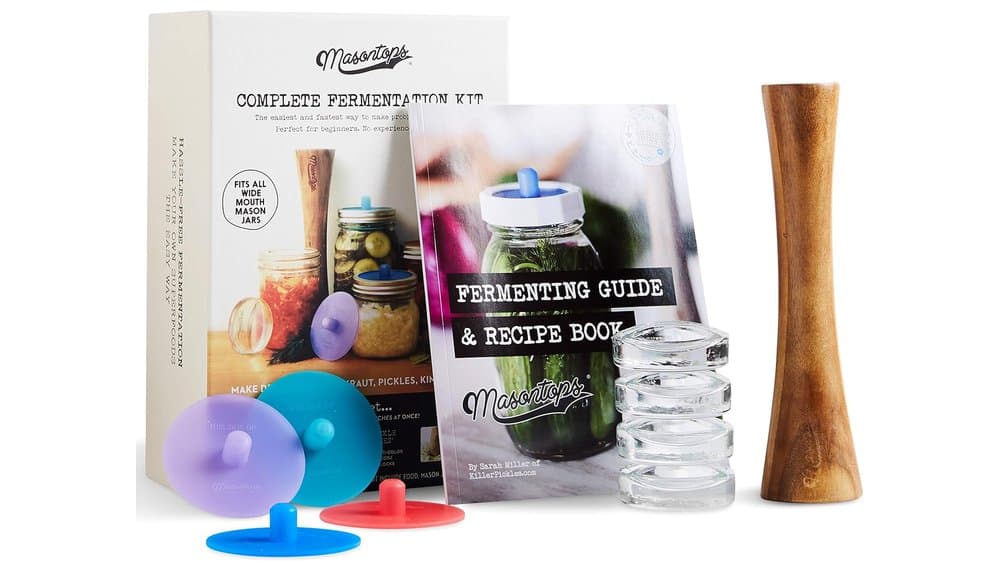
Masontops Complete Fermentation Jar Kit Review & Test
Review: Masontops Kit transforms Mason jars into precise fermentation tools for mastering the microbial environment.
Guides you might like
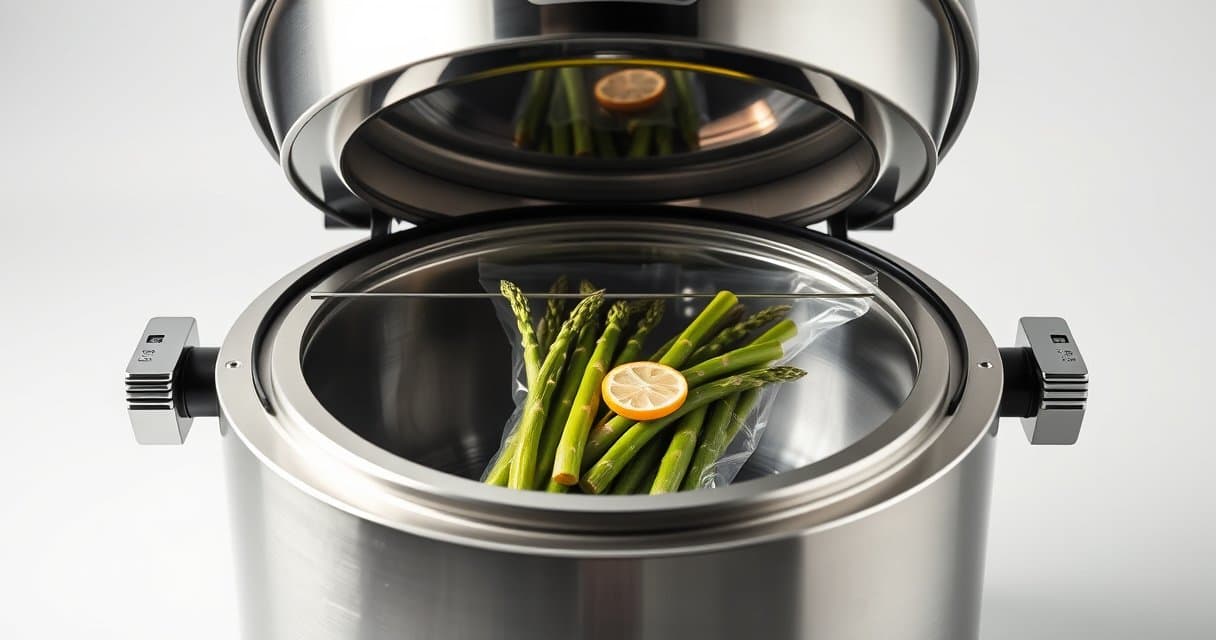
Bell Jar Vacuum Sealer Buying Guide
Upgrade to a chamber vacuum sealer for professional sous-vide results at home. Perfect for liquids and flawless, long-lasting seals.
Best Beginner Sous Vide Kit
Find the perfect sous-vide starter kit on a budget. Learn the three essential features to look for to cook your first perfect steak without the headache.
Best Vacuum Bags
Choose the right vacuum sealer bags for perfect results. Learn key specs like heat resistance, thickness, and barriers to avoid culinary disasters.